Every window where you left it
One photograph of your home, painted and then counted
The engine paints the house in one of twelve styles. Then the proof counts its windows, doors, gables and storeys in your photograph and in the painting, and names any count that differs, so you can see the house came through before you pay.
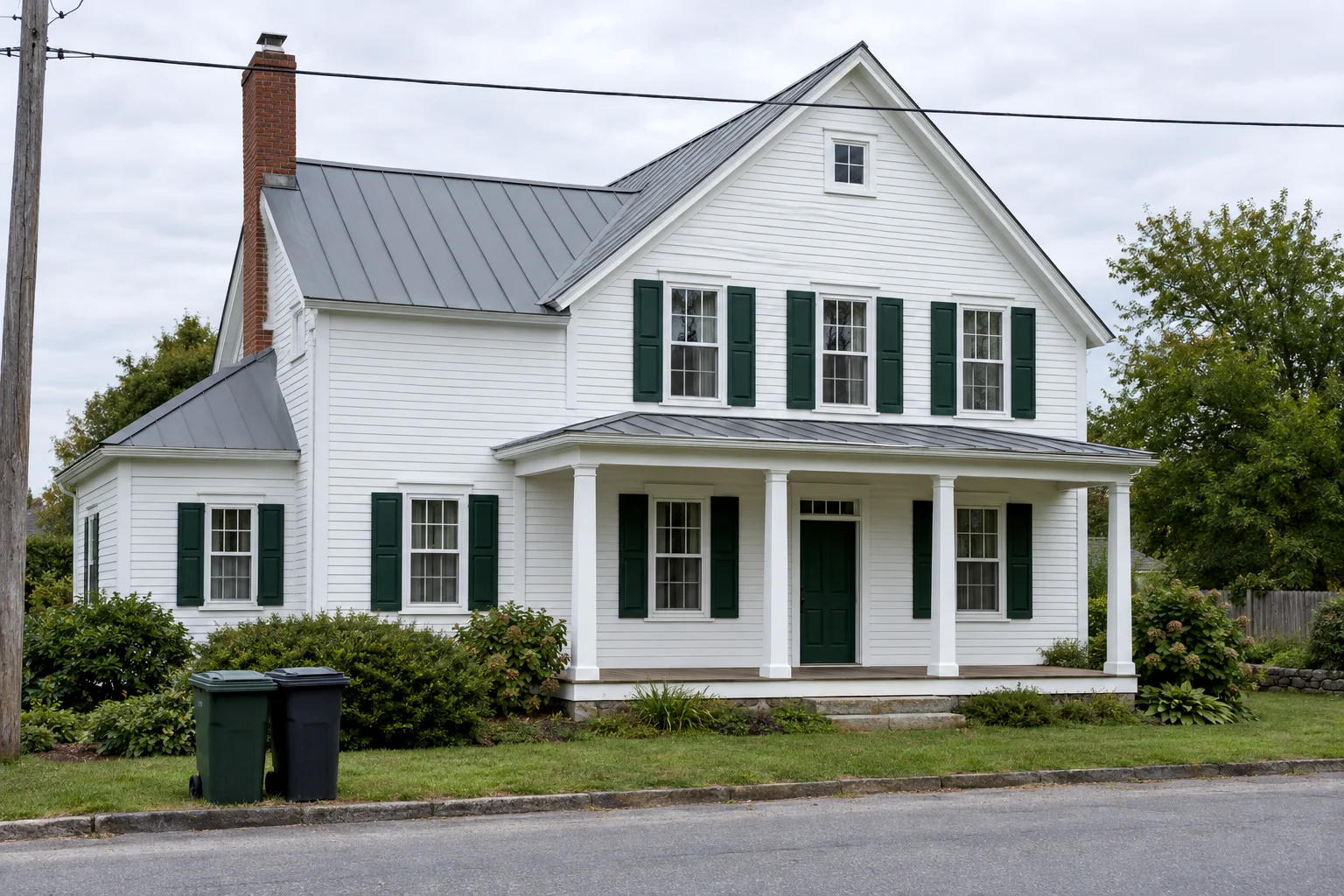
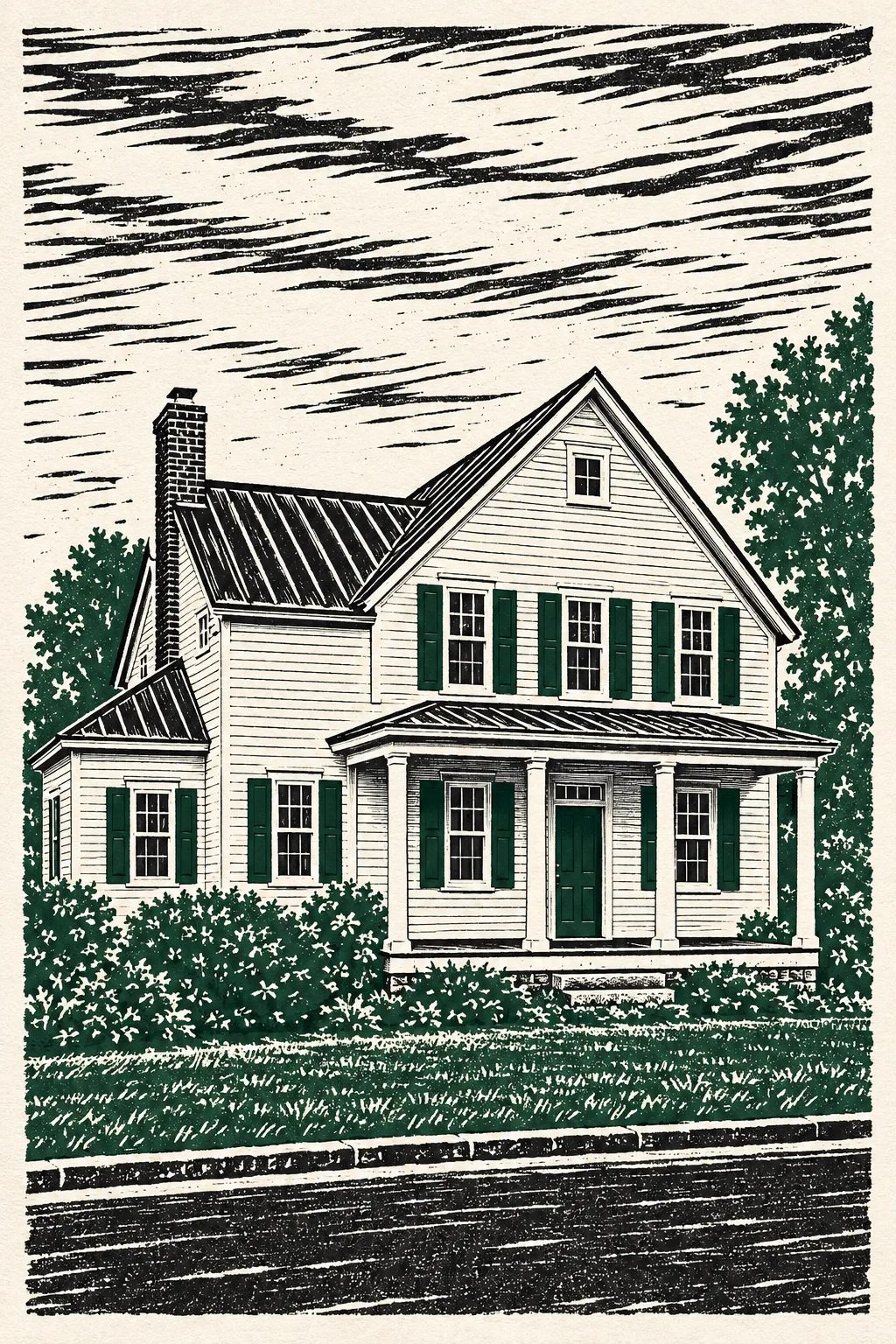
| Count | Photograph | Painting | Result |
|---|---|---|---|
| Windows | 10 | 10 | Matched |
| Doors | 1 | 1 | Matched |
| Gables | 2 | 2 | Matched |
| Storeys | 2 | 2 | Matched |
| Chimneys | 1 | 1 | Matched |
| Porch columns | 4 | 4 | Matched |
Why we count
A house with the wrong windows is another house
The engine sometimes moves a window, drops a chimney or adds a pane. That is why the proof counts six things in both pictures: windows, doors, gables, storeys, chimneys and porch columns. Equal numbers match; anything else is named on the proof.
A count that differs earns a free repaint from the same photograph, once. If the check cannot run, the proof says so and you compare the two by eye. A count is an aid to your eye, never a promise the painting is exact.
- Nobody in frame
- No words painted
- No invented house number
- Nothing added to the building
Sheet 2 · The studio
Send one photograph
From the street, the whole front in frame, nobody in it. Pick a style; the engine paints it upright and wide in about ninety seconds, and the proof opens with the count.
Ink Elevation
Your house as the architect drew it
Four passes on the house. A pass paints your photograph twice: upright and wide. Your photograph is kept beside the render, at proof size, so the two can be counted and repainted. Write to us and we delete both.
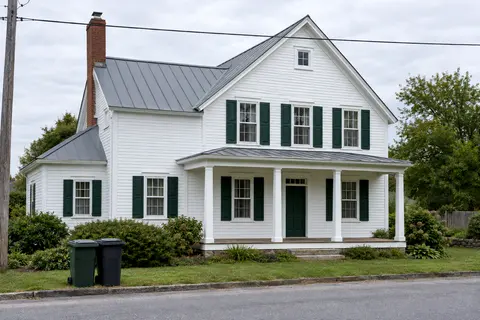
Linocut in Two Colours
A test house we generated for this page. Yours replaces it.
Sheet 3 · The schedule
Twelve styles in four sets
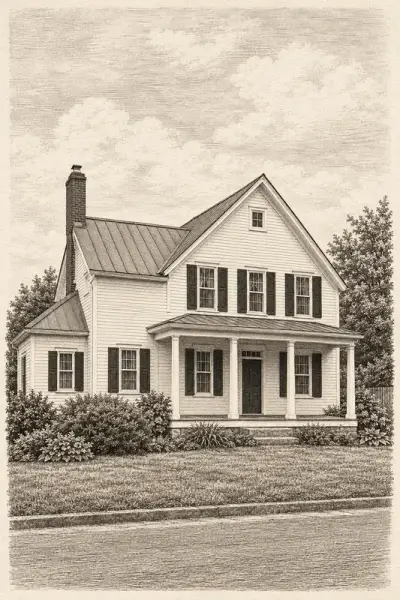
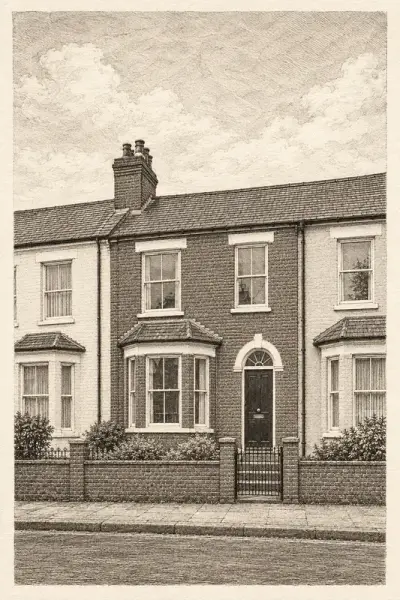
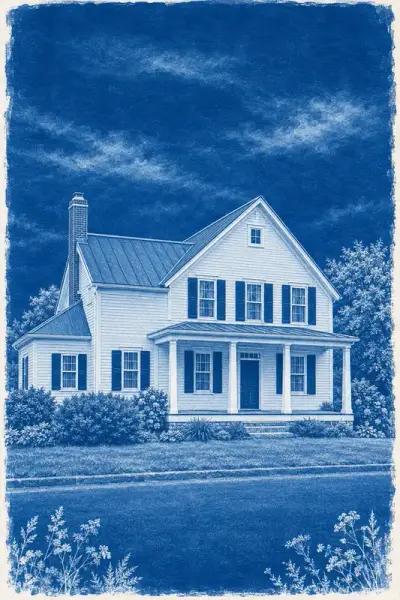
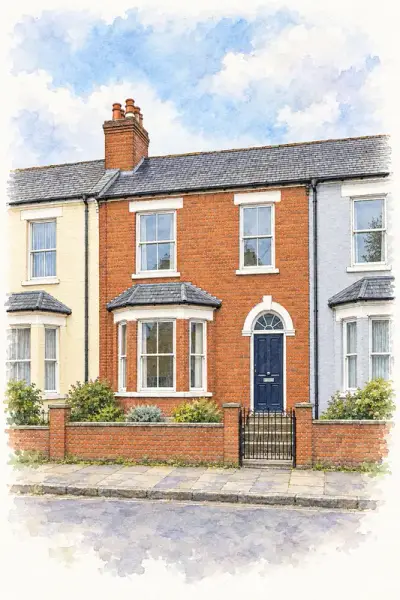
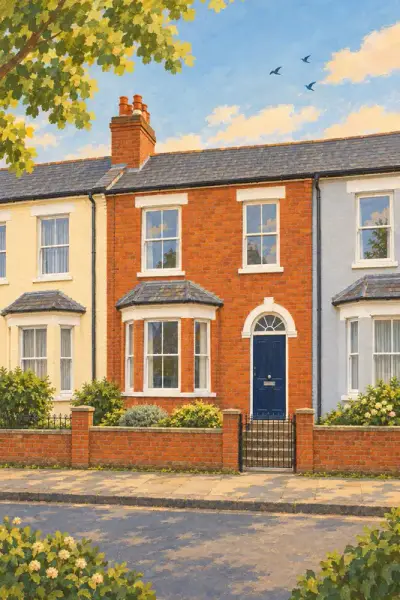
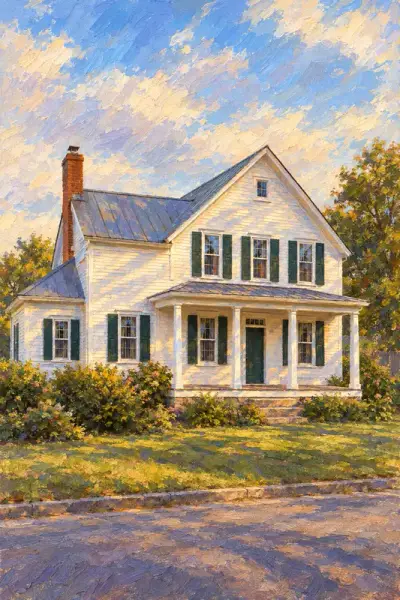
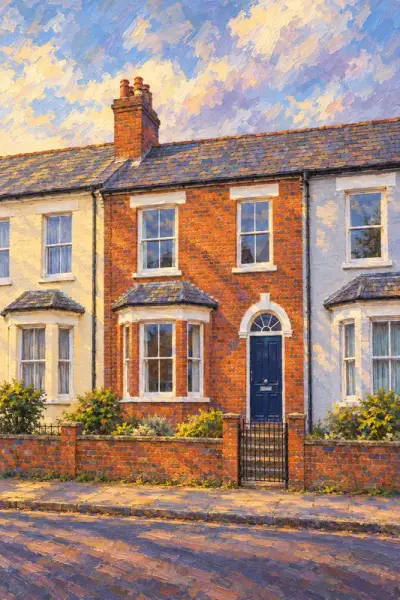
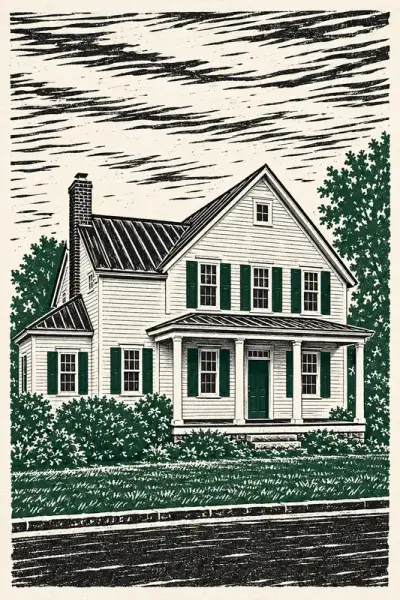
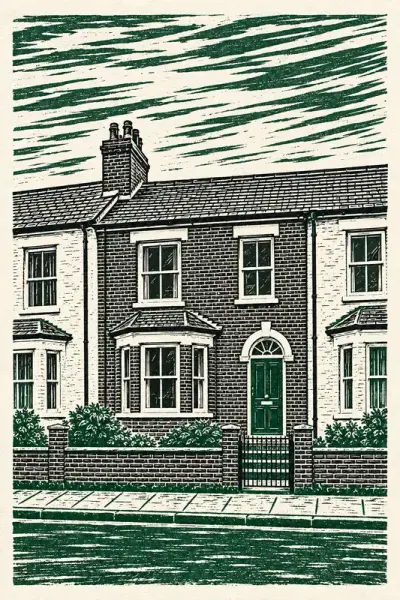
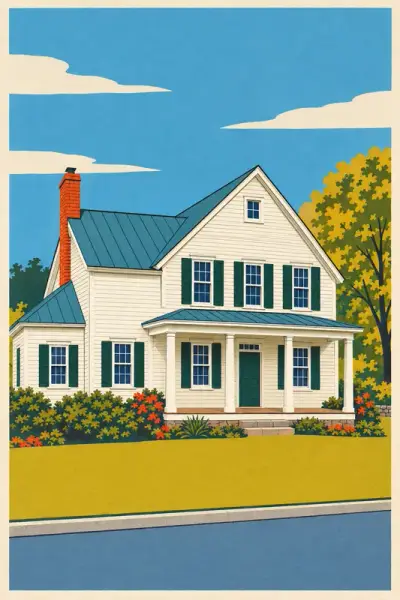
Every style below was painted from the same two test houses, which we generated so no real address is shown. Read across a row for the medium, down the pictures for the house staying itself.
The Architect
The house as it was drawn before it was built: technical pen on drafting film, a copperplate etched and printed by hand, and a cyanotype sun print.
- No.01Ink ElevationTechnical pen on drafting film, hatching, ruled ground lineYour house as the architect drew it
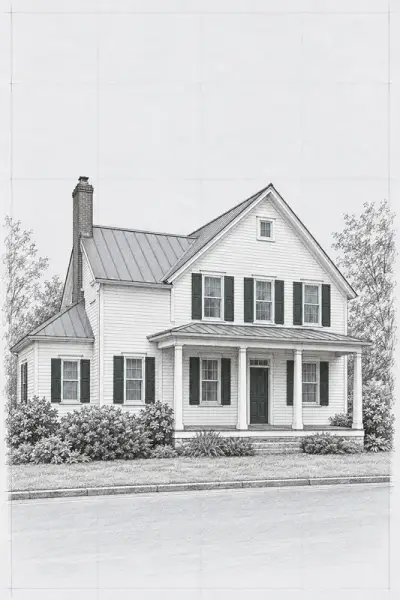
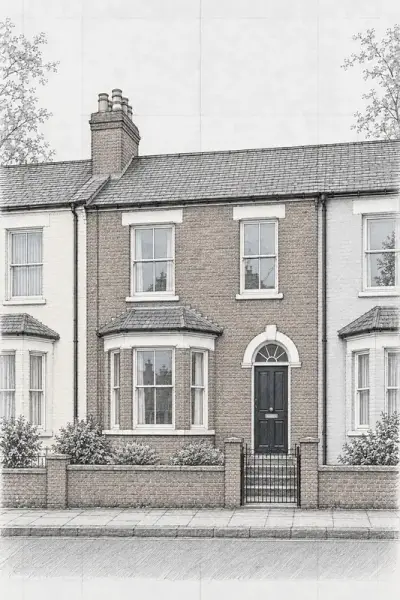
- No.02Copperplate EtchingBitten line, drypoint burr, plate tone, wiped highlightsYour house etched and printed by hand
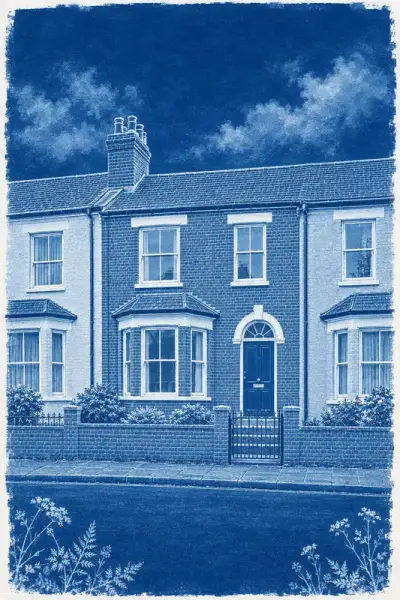
- No.03CyanotypeSun print, Prussian blue ground, white line, brushed edgesYour house as a sun-printed blueprint
The Watercolourist
The classic house portrait, three ways: pen and wash, storybook gouache, and an oil sketch made on the pavement opposite.
- No.04Watercolour and InkLoose pen line, wet washes, white paper left as lightYour house in pen and wash
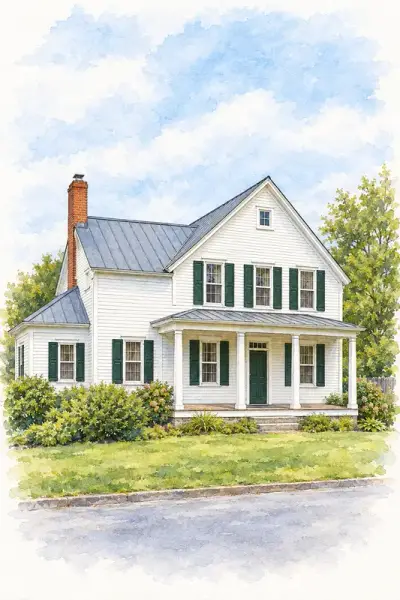
- No.05Gouache StorybookMid-century picture-book gouache, flat shapes, warm lightYour house in a picture book
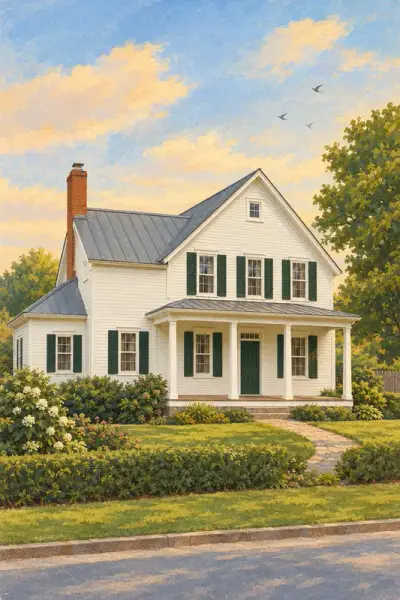
- No.06Plein Air OilOil sketch on board, broken colour, low sunYour house painted from across the street
The Printmaker
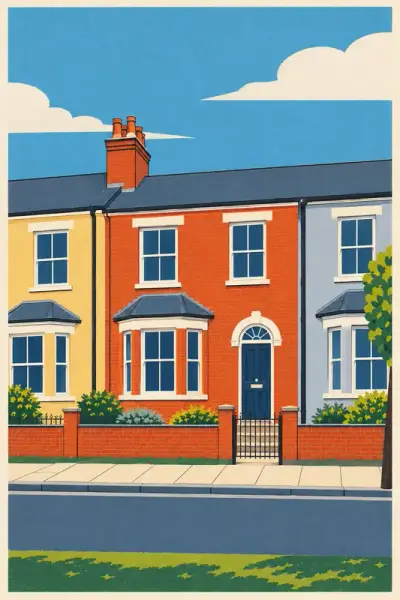
Carved, cut and pulled: a shin-hanga woodblock in the manner of Kawase Hasui, a two-colour linocut, and a 1962 screenprint.
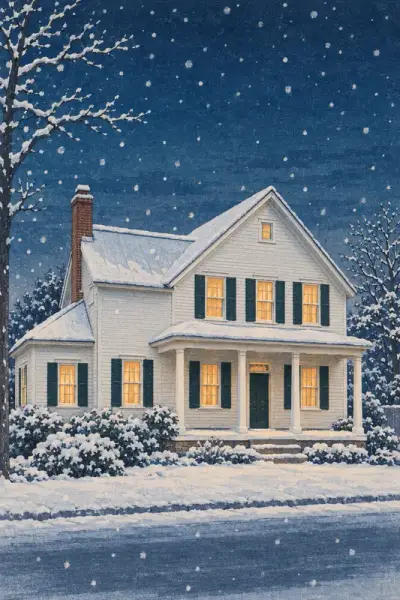
- No.07Woodblock at First SnowShin-hanga woodblock, falling snow, lit windowsYour house under the first snow
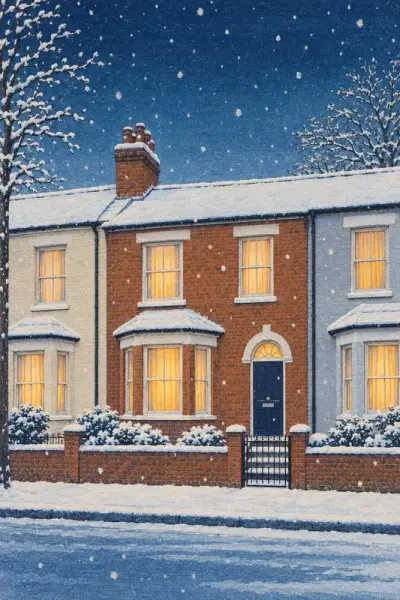
- No.08Two-Colour LinocutCarved line, two inks, the white of the paperYour house carved in two colours
- No.09Screenprint 1962Serigraph, flat colour fields, slight misregistrationYour house as a 1962 screenprint
The Seasons
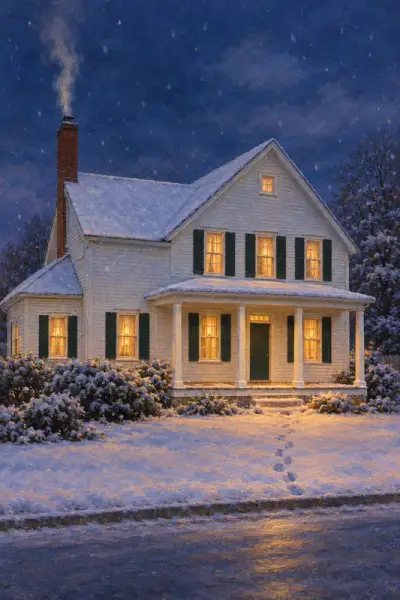
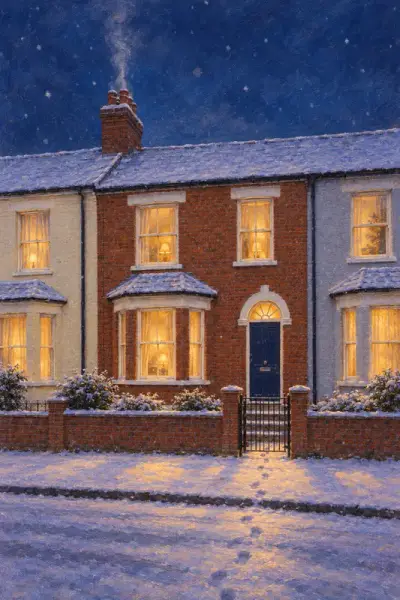
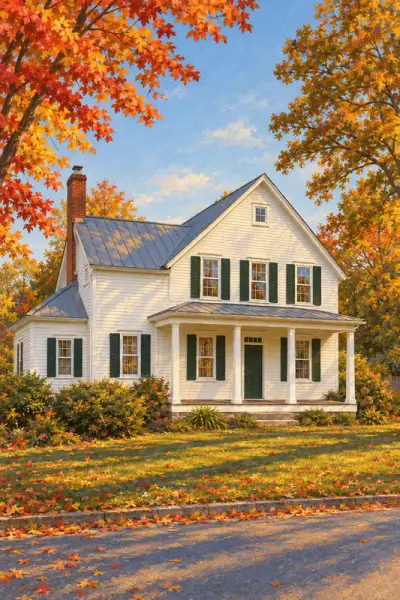
The same house in the light of one day of the year: the first snow at dusk, an October afternoon, a spring morning under blossom.
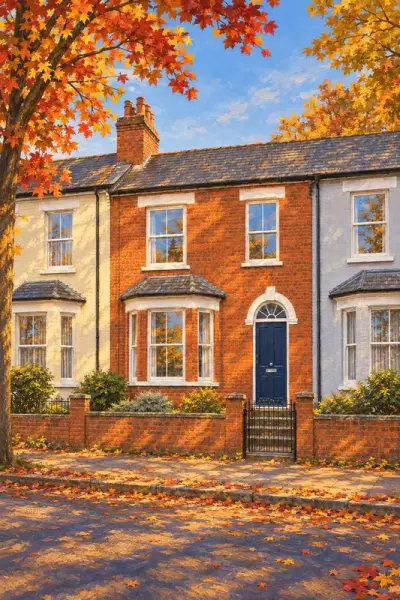
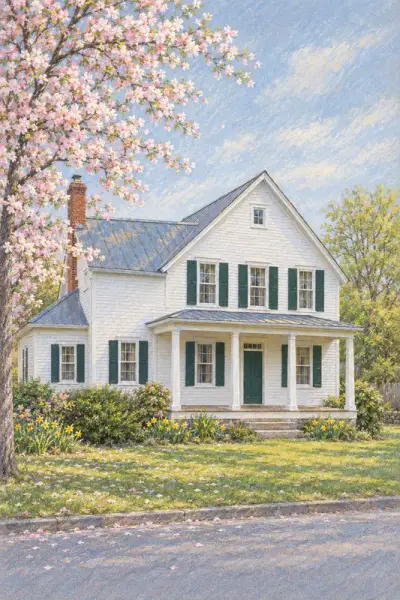
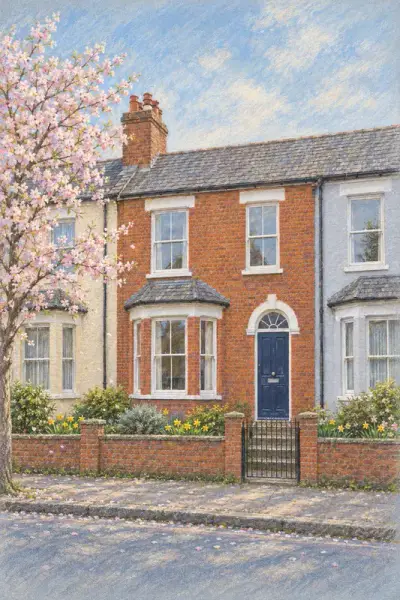
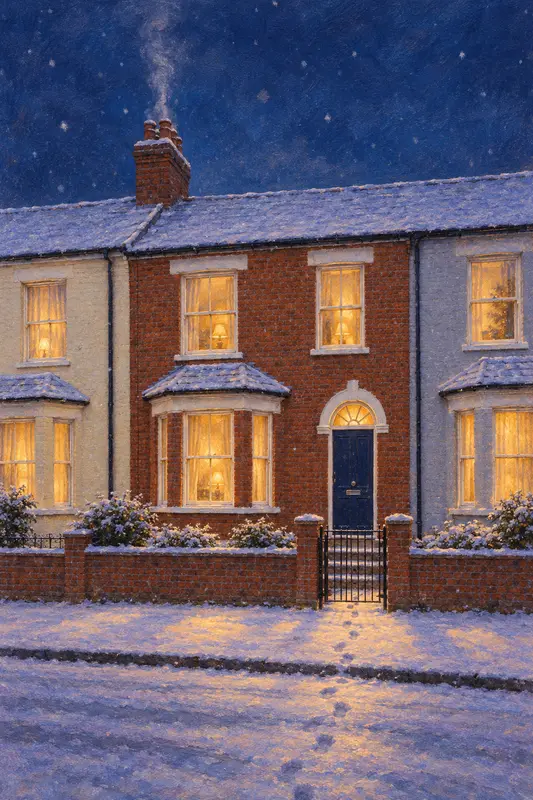
The winter set
First Snow at Dusk
Oil nocturne, blue dusk, lamplit windows, falling snow
A house in its first snow with the lamps on is the painting people give at the end of a year in a new place. The count runs on it the same way: a lit window is still one window.
See The Winter SetSheet 4 · Sizes
Paper to forty by sixty
Fine-art paper, cotton rag, stretched canvas and float-framed canvas, printed by Prodigi. The master is rebuilt at print resolution after you pay, so the print is sharper than the proof.
- 12 × 18″A hallway, a desk, a closing giftfrom $65
- 24 × 36″Over a mantel or a sofafrom $190
- 40 × 60″A whole wall, the largest we printfrom $440
For estate agents
A closing gift that is their house
Paint the listing photograph, ship it to the buyers’ new address, and check the count before you pay. No account and no form: the same studio and the same proof.
Send It To Them